

You’ve worked your whole life to get where you are now, and you’ve got a beautiful home to show for it. So the last thing you want to do is relocate or downsize because the stairs have become more of an obstacle than a convenience. The good news is that, in most homes, retrofitting a lift is entirely achievable. A residential lift will future-proof your home by increasing accessibility, so you can continue to comfortably live in it for years to come — and today, homeowners are choosing to retrofit for far more than accessibility alone. Read on to learn everything you need to know about retrofitting a lift into your Melbourne home.
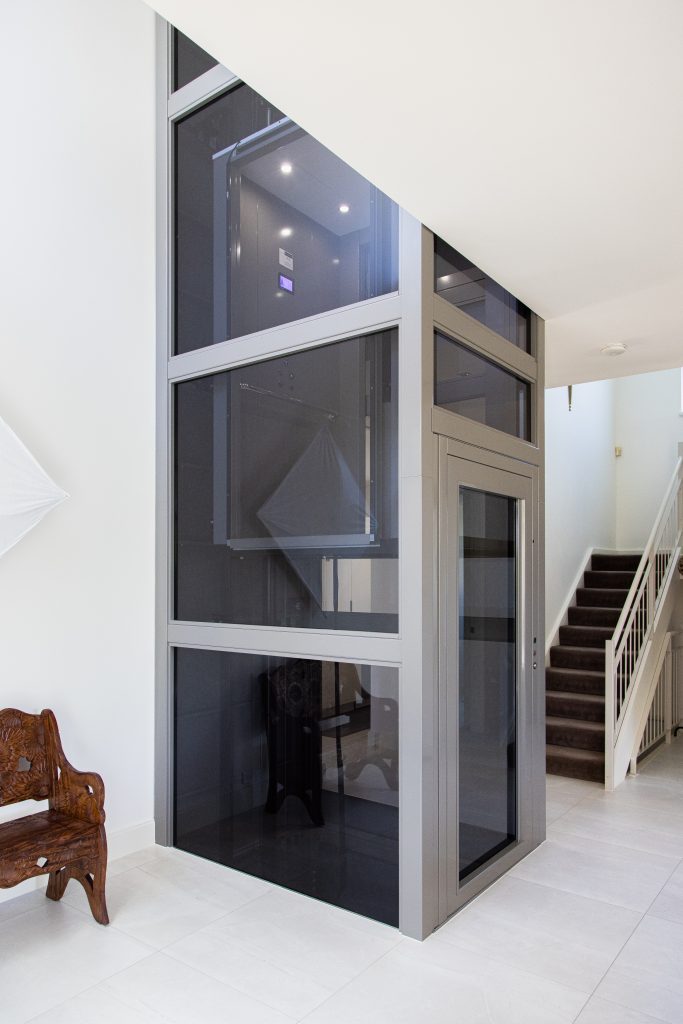
What you need to retrofit a lift into your home
Whether a retrofit will work for your home comes down to a handful of key factors: the space available, the location of your existing plumbing and electrical services, the amount of building work involved, and your budget. It’s a good idea to loop in both your builder and your lift provider early, so they can assess your home’s layout together and land on the right solution before any work begins. Here’s what to consider.
1. Space requirements of a retrofit home lift
You will need the appropriate space to retrofit a lift and its shaft, but you may be pleasantly surprised at how compact modern lifts can be — some shafts require a footprint as small as 1100mm x 1100mm, depending on the model. Stair voids, unused corners and underutilised rooms are often ideal spots for a retrofit, and there’s also the option to build a shaft as an extension to your existing structure. Where internal space simply isn’t there, an external lift installation can achieve the same result without the same footprint. For more information, read our helpful guide on how much space you need for a home elevator.
2. Placement restrictions for Melbourne home lifts
While most parts of your home can fit a shaft, there are a few locations where you cannot install a lift. You should avoid building too close to the property boundary line, particularly as this is a council-regulated requirement. Another location which is not recommended is over a body of water, such as an underground bore water supply. Finally, installation above underground car parks is not permitted unless the lift is providing access to the underground car park and can have the pit placed underneath it.
3. A quality lift installation company
It’s important to find a lift installation company that has a good reputation and meets safety standards. A lift is an important investment, so you want to make sure that you can trust the company you’ll work with. They should be able to assess your floor layout, structural requirements and access points, and talk you through any questions or concerns you have about retrofitting your home. If you’re already planning a renovation or extension, that’s often the most cost-effective time to build a lift into the design — bringing your builder, architect and lift specialist together early makes for a far smoother result.
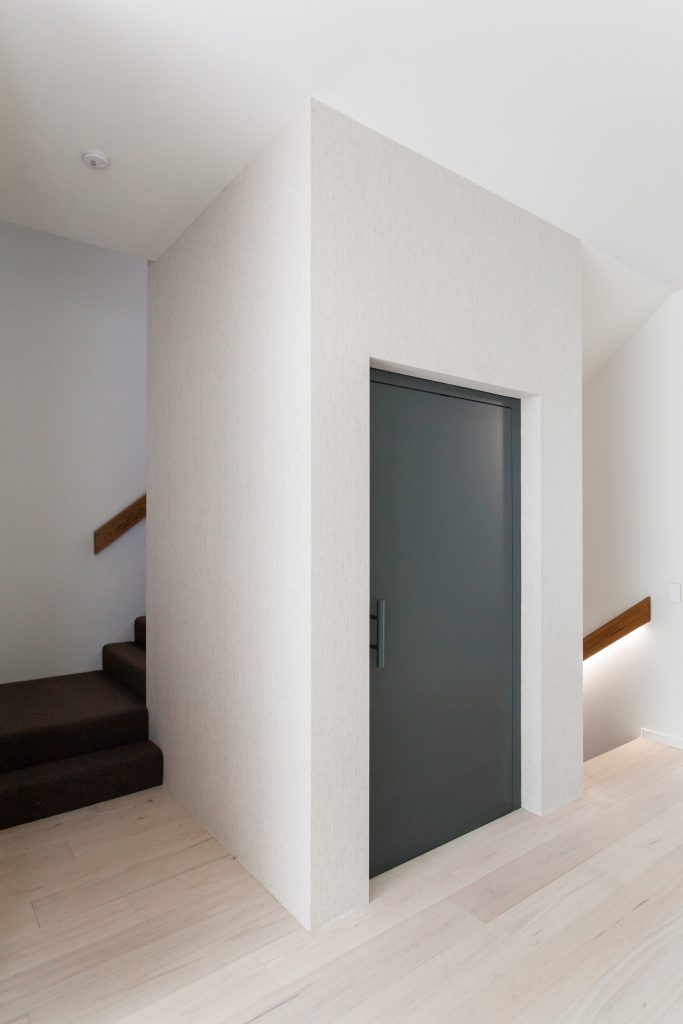
You may be surprised by how space-efficient a retrofitted lift can be. Check out our retrofit before and after images for Melbourne projects here.
Will a lift suit the aesthetic of your home?
Many homeowners worry that adding a lift will disrupt the look and feel of their home. In reality, residential lifts are designed to blend into your home’s architecture and interior design, not fight against it. At Platinum Elevators, every lift is custom-designed with a wide range of colours, materials and finishes, so whether your home is heritage, contemporary or somewhere in between, your lift can be built to complement it rather than stand out for the wrong reasons.
How to retrofit a lift into your home
Now that you have the requirements and found a quality lift installation company, it’s time for the most important part: how to retrofit the lift into your home. The process can be broken down into four simple steps.
1. Visit a lift showroom in Melbourne
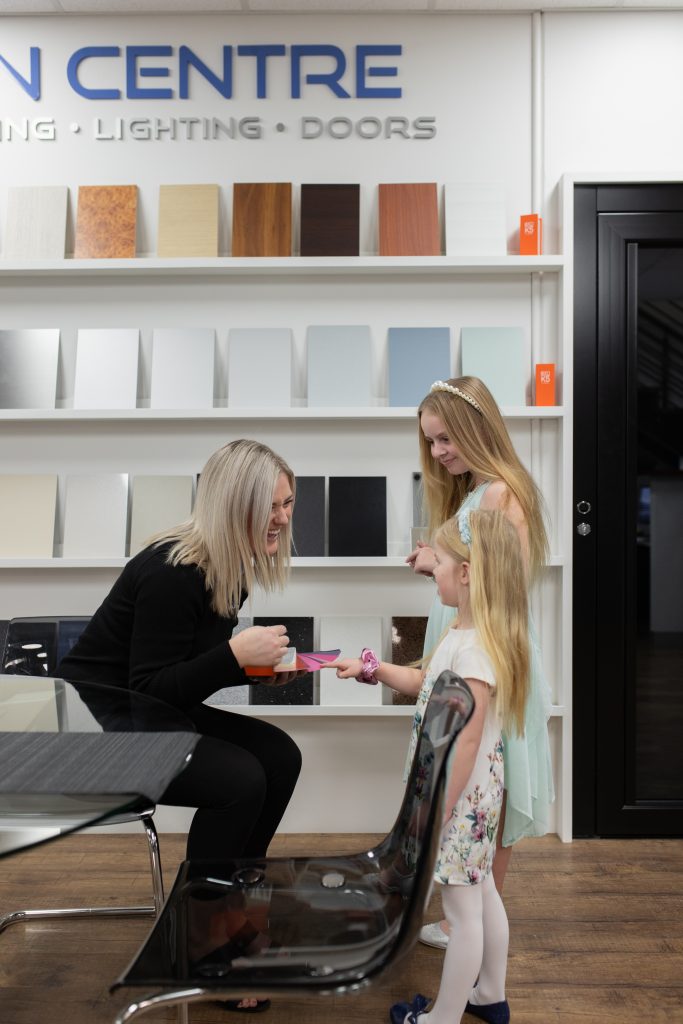
Before the installation can start, you will need to choose a lift design. Visiting your selected company’s showroom is the best way to see your options and customisations. You will receive helpful information from an elevator expert who will talk you through the dimensions, safety features, packages and finishes. The expert should be able to provide you with a quote, which will be followed by a contract.
You can even see our elevator retrofit before and after images here.
2. The design and build of the lift commences
With your desired lift and features selected, as well as the contract signed and deposit paid, the engineer can start to draw up your design. This can take between 4-6 days to finish. You should be given an indication of the timeline for your retrofit.
3. Your parts are ordered and the lift is manufactured
After your lift design has been approved, the high-quality materials and parts can be ordered from Italy. It can take around 16 weeks for your parts to be collected, manufactured and shipped
4. The retrofit lift installation
It’s time to bring your lift to life! The lift installation company will come into your home to retrofit the lift. The process can take between 2-4 weeks. This will include extensive electrical and quality assurance checks before handover.
Can you stay in your house while a lift is retrofitted?
No one wants the inconvenience of living away from their home for a few weeks. Luckily, the retrofit installation of a lift should not cause any major disruptions to your home. Most of the residence will remain safe and functional to use, with only a portion closed off for safety reasons. This can vary based on where in the house your lift is being installed. However, a good lift installation company should be able to work with your requirements to ensure minimal disruptions are made.
Why more Melbourne homeowners are retrofitting a lift
A home lift isn’t just for later in life anymore. While accessibility and ageing in place remain two of the most common reasons to retrofit, we’re seeing more and more families choose a lift purely for the everyday convenience it adds.
Parents with young kids love having a lift to move prams, car seats, laundry and shopping between floors. Pet owners appreciate being able to help an older or larger dog get around the house without the strain of stairs. For anyone recovering from a sports injury or surgery, a lift can make getting between levels far safer and easier during recovery, and it means you’re never cut off from any part of your own home.
As Melbourne blocks get smaller and more households build up rather than out, and as multigenerational living becomes more common, a lift helps keep every floor of the home genuinely usable for everyone in it — regardless of age or mobility. Beyond day-to-day convenience, a well-designed retrofit can also add long-term value to your property, as more buyers look for homes that support flexible, accessible living.
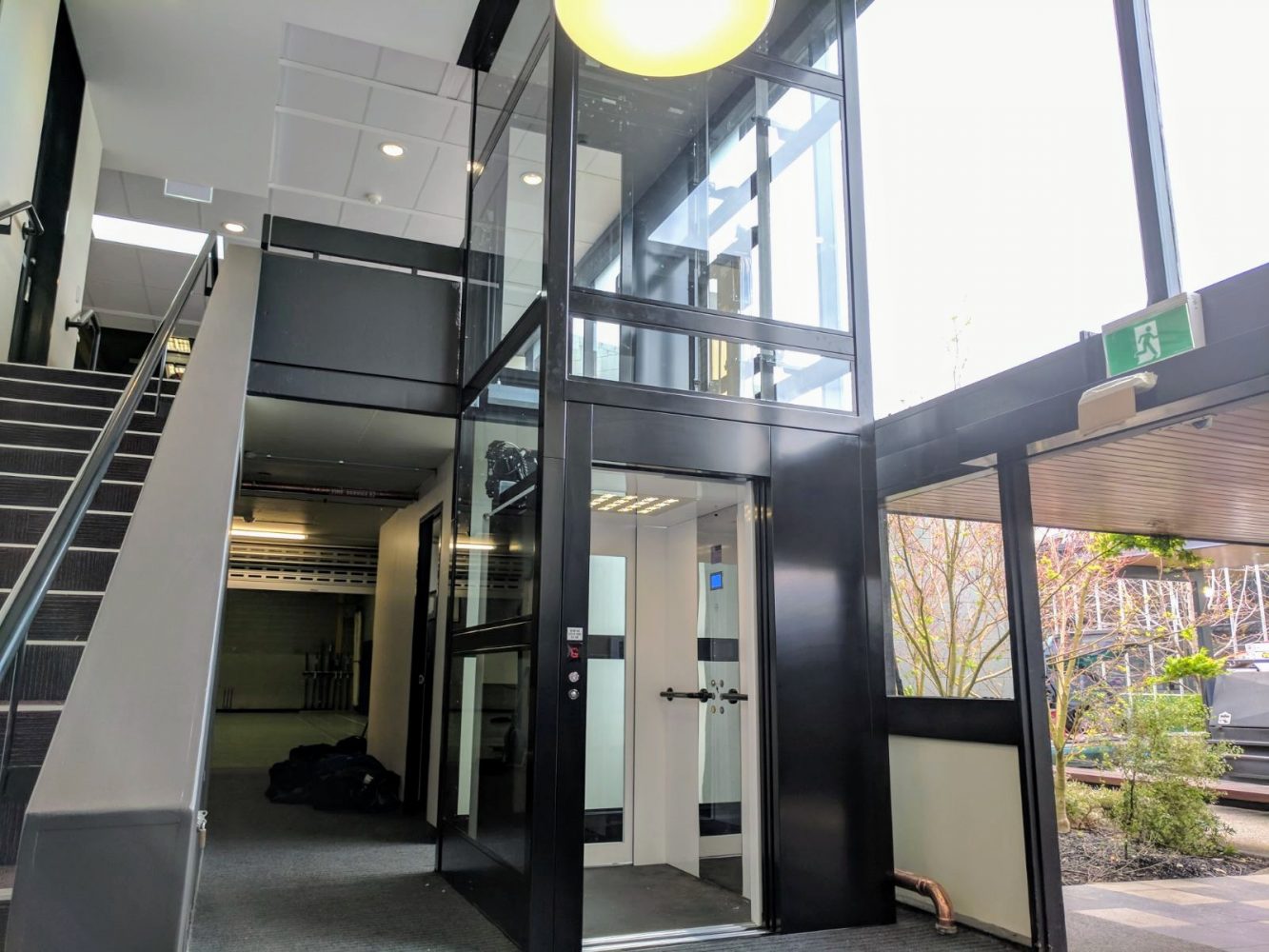
The cost to retrofit a residential lift in Melbourne
Cost is an important factor to consider when you retrofit your home with a lift, as it can be the deciding factor for many. When looking at cost, you should consider that a lift is an investment that will future-proof your home with increased accessibility and comfort.
The average cost of residential lifts in Melbourne is between $35,000 (+gst) and $65,000 (+gst), depending on the lift design, elevator travel distance, size, number of stops, quality of materials, where and how the lift is built and the manufacturer. This may not include builder’s works such as changing plumbing, electrical wiring or removing walls. You should speak to your lift provider to ensure they quote for these works, too.
At Platinum Elevators, we are proud to use only the highest quality European materials and engineering. This means that our lifts can last up to 30 years before needing a major update. With careful planning and the right team around you, retrofitting a lift is one of the most worthwhile investments you can make in your home’s future.
For more information tailored to your circumstances and how you can future-proof your home, get in touch with us here, or stop by our Keysborough showroom to meet the team, test out our demo lifts and explore your options.